NutraFact
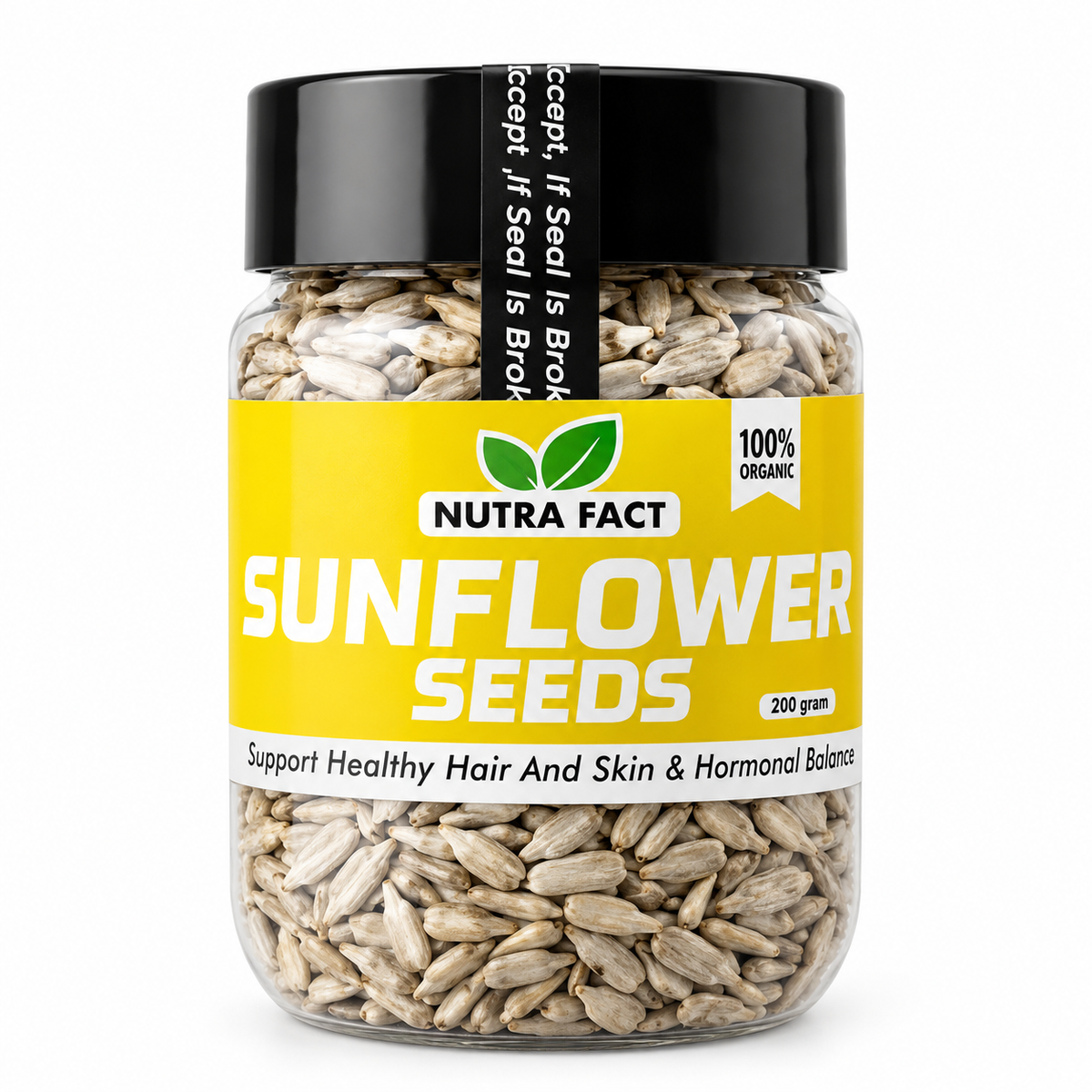
Sunflower seeds 200(Gram)
Sunflower seeds 200(Gram)
Couldn't load pickup availability
Nutrafact Sunflower Seeds – 200g
100% Natural Sunflower Seeds | Nutrient-Rich Snack | Supports Healthy Skin, Hair & Overall Wellness
Product Description
Discover the natural goodness of Nutrafact Sunflower Seeds, a nutritious addition to your daily diet. Sunflower seeds are naturally rich in healthy fats, plant-based protein, dietary fiber, vitamin E, and essential minerals that help support overall health and well-being.
Whether you enjoy them as a snack, sprinkle them over salads, or add them to your breakfast, Nutrafact Sunflower Seeds are a convenient way to add valuable nutrients to your everyday meals.
Make healthy eating simple with Nutrafact Sunflower Seeds!
Key Benefits of Sunflower Seeds
- Supports Healthy Skin: Naturally rich in vitamin E, an antioxidant that helps protect cells from oxidative stress and supports normal skin health.
- Supports Healthy Hair: Provides vitamin E, protein, and minerals that contribute to normal hair health when consumed as part of a balanced diet.
- Provides Plant-Based Protein: Helps support muscle maintenance and the body's normal growth and repair processes.
- Supports Heart Health: Contains unsaturated fats that can support healthy cholesterol levels when they replace saturated fats in the diet.
- Supports Energy Metabolism: Provides nutrients such as magnesium and vitamin B6 that help the body perform normal metabolic functions.
- Supports Normal Immune Function: Contains vitamin E, zinc, and other nutrients involved in normal immune system function.
- Supports Digestive Health: Provides dietary fiber, which helps support regular bowel movements and healthy digestion.
- Supports Bone and Muscle Function: Contains magnesium and phosphorus, which contribute to normal muscle and bone function.
- Provides Antioxidants: Vitamin E helps protect cells from oxidative damage.
- Helps with Satiety: Protein, fiber, and healthy fats can help you feel satisfied after eating.
Nutritional Benefits of Each Nutrient
1. Vitamin E
Sunflower seeds are a well-known dietary source of vitamin E. This antioxidant helps protect body cells from oxidative stress and contributes to normal skin health.
2. Healthy Fats
Sunflower seeds contain predominantly unsaturated fats, including linoleic acid, an essential omega-6 fatty acid. These fats help provide energy and support normal cell function.
3. Plant-Based Protein
Protein contributes to the maintenance of muscles and the growth and repair of body tissues.
4. Dietary Fiber
Fiber supports digestive health, helps maintain bowel regularity, and may contribute to feeling full for longer.
5. Magnesium
Magnesium plays a role in normal muscle and nerve function, energy production, and maintaining healthy bones.
6. Zinc
Zinc contributes to normal immune function, wound healing, and the maintenance of healthy skin and hair.
7. Phosphorus
Phosphorus supports normal bones and teeth and helps the body produce and use energy.
8. Vitamin B6
Vitamin B6 helps the body use energy from food and supports normal nervous system function.
The exact nutrient content depends on the seed variety, processing, and serving size.
How to Eat Nutrafact Sunflower Seeds
Sunflower seeds are versatile and can be incorporated into many everyday foods.
1. As a Daily Snack
Enjoy a small handful as a snack between meals. Choose unsalted seeds if you want to limit your sodium intake.
2. With Breakfast
Sprinkle sunflower seeds over oatmeal, porridge, breakfast cereal, or yogurt.
3. In Smoothies
Add a small quantity of shelled sunflower kernels to smoothies for extra flavor, healthy fats, and plant-based protein.
4. In Salads
Sprinkle them over vegetable salads, fruit salads, or grain bowls for a pleasant crunch.
5. In Baking
Add sunflower kernels to homemade bread, whole-grain crackers, muffins, and healthy snack bars.
6. With Homemade Trail Mix
Combine sunflower kernels with nuts, pumpkin seeds, and dried fruit for a convenient snack.
7. In Homemade Spreads
Blend shelled sunflower seeds into a smooth seed butter that can be spread on whole-grain toast.
8. In Everyday Cooking
Add them to cooked vegetables, rice dishes, soups, or homemade granola for extra texture and flavor.
Important: If your sunflower seeds are sold with their hard outer shells, remove the shells before eating the kernels. Always follow the product packaging instructions.
When Should You Eat Sunflower Seeds?
You can enjoy sunflower seeds at different times of the day:
- In the morning: Add them to breakfast for extra nutrients.
- Between meals: Enjoy a small portion as a satisfying snack.
- After exercise: Include them in a balanced snack alongside a protein-rich food.
- With lunch or dinner: Sprinkle them over salads or cooked dishes.
There is no single best time to eat sunflower seeds. Consistency and a balanced diet matter more than the time of day.
Recommended Serving Size
A practical serving is approximately 20–30 grams per day for most adults, depending on their individual calorie and nutritional needs.
Sunflower seeds are energy-dense, so moderate portions are a good choice. Start with a smaller amount if you are not used to eating seeds.
Drink enough water throughout the day, especially when increasing your fiber intake.
Who Can Benefit from Sunflower Seeds?
Nutrafact Sunflower Seeds may be a useful addition to the diets of:
- Health-conscious adults: Looking for nutrient-rich foods to include in everyday meals.
- People interested in skin and hair nutrition: Seeking dietary sources of vitamin E, protein, and minerals.
- Active individuals: Looking for a convenient source of energy, healthy fats, and plant-based protein.
- Vegetarians and vegans: Wanting to add variety to their plant-based diets.
- People looking for nutritious snacks: Seeking an alternative to some highly processed snack foods.
- Older adults: Looking to include foods that provide protein, healthy fats, and essential minerals.
- People managing their weight: Sunflower seeds can fit into a balanced eating plan when portion sizes are considered.
- People interested in digestive health: May benefit from their fiber content as part of a fiber-rich diet.
Are Sunflower Seeds Good for Diabetes?
Sunflower seeds can fit into a balanced eating plan for people with diabetes. They provide healthy fats, protein, and some fiber, and plain sunflower seeds generally contain little naturally occurring sugar.
However, portion size matters because sunflower seeds are calorie-dense. Choose unsalted, uncoated varieties where possible, and account for them within your overall meal plan.
Important: Sunflower seeds do not cure diabetes or replace prescribed medication. People taking diabetes medication should continue following their healthcare professional's advice.
Can Sunflower Seeds Help with Weight Management?
Sunflower seeds contain protein, fiber, and healthy fats that may help you feel satisfied. A measured portion can be included in a balanced diet.
However, sunflower seeds are not a weight-loss treatment. Weight management depends on overall food intake, physical activity, sleep, and other individual factors.
Are Sunflower Seeds Good for Hormonal Health?
Sunflower seeds provide vitamin E, healthy fats, and minerals that contribute to normal body functions. These nutrients are part of a balanced diet that supports general health.
However, sunflower seeds have not been established as a treatment for hormonal imbalance, thyroid disorders, PCOS, or other hormone-related conditions. They should not replace medical assessment or treatment.
Ingredients
Ingredient: Sunflower Seeds.
Please verify the final ingredient declaration against your actual product packaging. If the product contains added salt, flavorings, oils, or other ingredients, list them accurately.
Storage Instructions
- Store in a cool, dry place away from direct sunlight.
- Keep the container tightly closed after each use.
- Protect from moisture and excessive heat.
- Follow the packaging's best-before date.
- Discard the product if you notice an unusual smell, visible mold, or signs of spoilage.
Precautions and Allergen Information
- People with a known sunflower seed allergy should avoid the product.
- Eat in moderation because sunflower seeds are calorie-dense.
- If you have difficulty chewing or swallowing, choose an appropriate product form and seek professional advice when necessary.
- Check the packaging for possible cross-contact with other allergens.
- If you have a medical condition requiring a restricted diet, consult your healthcare professional or dietitian about suitable portions.
Frequently Asked Questions
Q1. Can I eat sunflower seeds every day?
Yes. Most adults can include moderate portions in a balanced diet, provided they tolerate the seeds and have no relevant allergy or dietary restriction.
Q2. Do sunflower seeds support healthy hair?
They provide nutrients such as vitamin E, protein, and minerals that contribute to normal health. However, they are not a guaranteed treatment for hair loss.
Q3. Can I eat sunflower seeds on an empty stomach?
Yes, if you tolerate them comfortably. There is no established requirement to eat them on an empty stomach.
Q4. Can I add sunflower seeds to smoothies and salads?
Yes. Shelled sunflower kernels work well in smoothies, salads, yogurt, oatmeal, and many homemade recipes.
Q5. Are sunflower seeds suitable for vegetarians and vegans?
Yes. Plain sunflower seeds are plant-based and can be included in vegetarian and vegan diets.
Q6. Can sunflower seeds treat a disease?
No. Sunflower seeds are a nutritious food, not a medicine. They may contribute to a balanced diet but cannot cure or replace treatment for any disease.
Why Choose Nutrafact Sunflower Seeds?
Choose Nutrafact Sunflower Seeds for a convenient way to add plant-based nutrition and natural crunch to your everyday meals. Enjoy them as a snack or incorporate them into your favorite recipes as part of a varied, balanced lifestyle.
Product Name: Nutrafact Sunflower Seeds
Net Weight: 200g
Category: Seeds & Healthy Foods
Main Ingredient: Sunflower Seeds
Suggested Use: Snacks, salads, smoothies, breakfast bowls, baking, and cooking
Storage: Keep sealed in a cool, dry place.
Nutrafact — Simple Nutrition for Everyday Wellness.
Disclaimer: This product is a food, not a medicine. Nutritional benefits are general and depend on overall dietary patterns. It is not intended to diagnose, treat, cure, or prevent any disease.